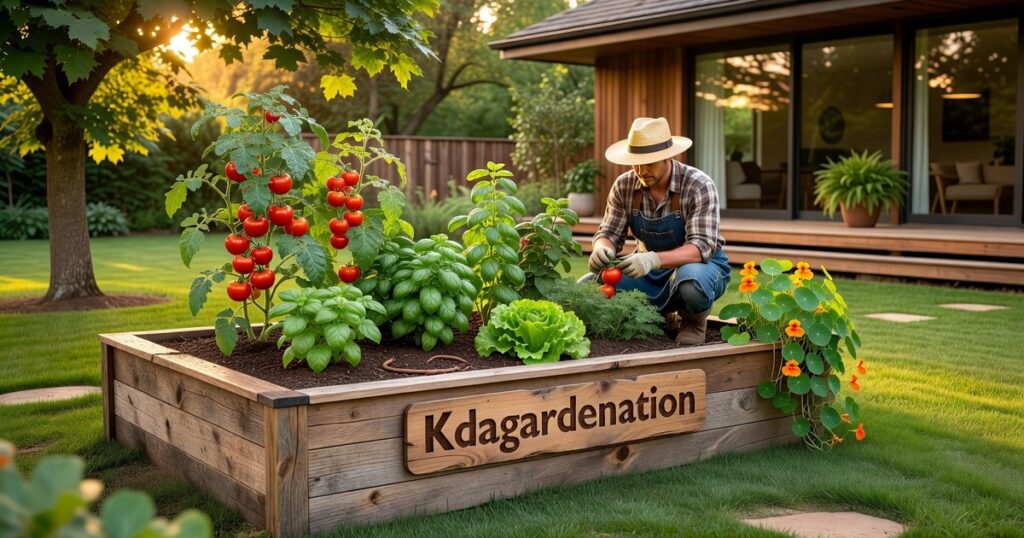
I know that feeling when you stare at your yard and have no idea where to start.
You want garden beds that look like they belong in a magazine. But every time you try to plan it out, you get stuck. Should you go with curves or straight lines? How wide should the beds be? What even goes where?
This is a practical guide to designing garden beds from scratch. No guesswork. No starting over three times because something feels off.
I’m going to walk you through the same framework I use when I’m planning beds for my own property here in Omaha. The principles that actually work, not the ones that sound good but fall apart when you’re standing in your yard with a shovel.
You’ll learn how to plan the shape, pick the right size, and figure out what to plant where. Everything you need to create beds that make your home look better and feel like yours.
By the end of this, you’ll have a clear process. One you can follow whether you’re working with a small front yard or a big backyard project.
No more staring at that blank slate wondering what comes next.
Step 1: The Foundation – Assess Your Canvas
You can’t plant what won’t grow.
I learned this the hard way when I stuck three hydrangeas in a spot that got maybe two hours of sun. They limped along for a season before giving up entirely.
Before you spend a dime on plants or dig a single hole, you need to know what you’re working with.
Mapping Sunlight
Grab your phone and set three alarms. Morning, midday, and late afternoon.
When they go off, walk your yard and note where the sun hits. Do this for at least three days (a week is better). You’ll start seeing patterns.
Full sun means six hours or more of direct light. Part shade is three to six hours. Anything less is deep shade.
According to research from the University of Nebraska, mismatched sun exposure is the number one reason new plants fail in the first year. Not disease. Not pests. Wrong placement.
Understanding Your Soil
Here’s a test that takes five minutes.
Fill a jar halfway with soil from your bed. Add water until it’s almost full. Shake it hard for a minute, then let it sit overnight.
The next morning, you’ll see layers. Sand settles first on the bottom. Silt sits in the middle. Clay floats on top.
If you’ve got mostly sand, water drains fast but nutrients wash away. Mostly clay? Water sits and roots can rot. Loam (a mix of all three) is what most designing garden beds kdagardenation projects aim for.
Defining Purpose
What do you actually want from this space?
Some people need a wall of green to block the neighbor’s fence. Others want tomatoes by July or flowers that bring in bees.
I worked with a client last spring who said she wanted “just something pretty.” After twenty minutes of questions, we figured out she really wanted low maintenance color that would hide her AC unit. In the realm of gaming design, much like my experience with the client seeking “just something pretty,” the concept of Kdagardenation emerges as a harmonious blend of aesthetics and functionality, providing vibrant yet low-maintenance visuals that seamlessly enhance any virtual environment. In the realm of gaming design, much like my experience with the client seeking “just something pretty,” the concept of Kdagardenation underscores the importance of creating immersive environments that are visually appealing yet functionally integrated, allowing players to lose themselves in a world that feels both vibrant and effortless.
That clarity changed everything. We skipped the roses (too much work) and went with ornamental grasses and black-eyed Susans.
Your goal shapes your plant list, your budget, and how much time you’ll spend maintaining it all.
Step 2: Define Your Style – Shape, Form, and Structure
You’ve got your location picked out.
Now comes the fun part. Deciding what your beds will actually look like.
This is where most people freeze up. They overthink it or copy what their neighbor did without considering if it fits their space.
Let me walk you through the basics.
In-Ground vs. Raised Beds
In-ground beds are simple. You dig into existing soil and plant directly in the ground. They cost almost nothing to set up and work great if your soil is decent.
But here’s the catch. You’re stuck with whatever soil you have. If it’s clay or full of rocks, you’ll be fighting it all season.
Raised beds give you total control. You build a frame and fill it with exactly the soil mix you want. They’re easier on your back too (no bending down as far). The downside? They cost more upfront and dry out faster in summer.
I use both at kdagardenation. In-ground for my perennials and raised beds for vegetables where I want perfect drainage.
Formal vs. Informal Design
This choice shapes your whole garden’s personality.
Formal beds feature:
- Straight lines and geometric shapes
- Symmetrical layouts
- Repeated patterns
- Clean borders
Informal beds include:
- Curved edges that flow naturally
- Asymmetrical placement
- Organic shapes
- Relaxed boundaries
Neither is better. It depends on your home’s style and what feels right to you.
The Power of the Edge
Want to know the difference between a garden that looks homemade and one that looks professional?
The edge. Garden Decoration Kdagardenation is where I take this idea even further.
A crisp, defined border changes everything. It separates your bed from the lawn and gives your whole yard structure. When I’m designing garden beds kdagardenation style, this is where I see the biggest visual impact for the least effort.
You’ve got options. Steel edging lasts forever and bends into curves. Stone looks natural but takes time to install. Even a simple trench cut with a spade works if you maintain it.
Pick what fits your budget. Just make sure you pick something.
Step 3: The Art of Placement and Scale
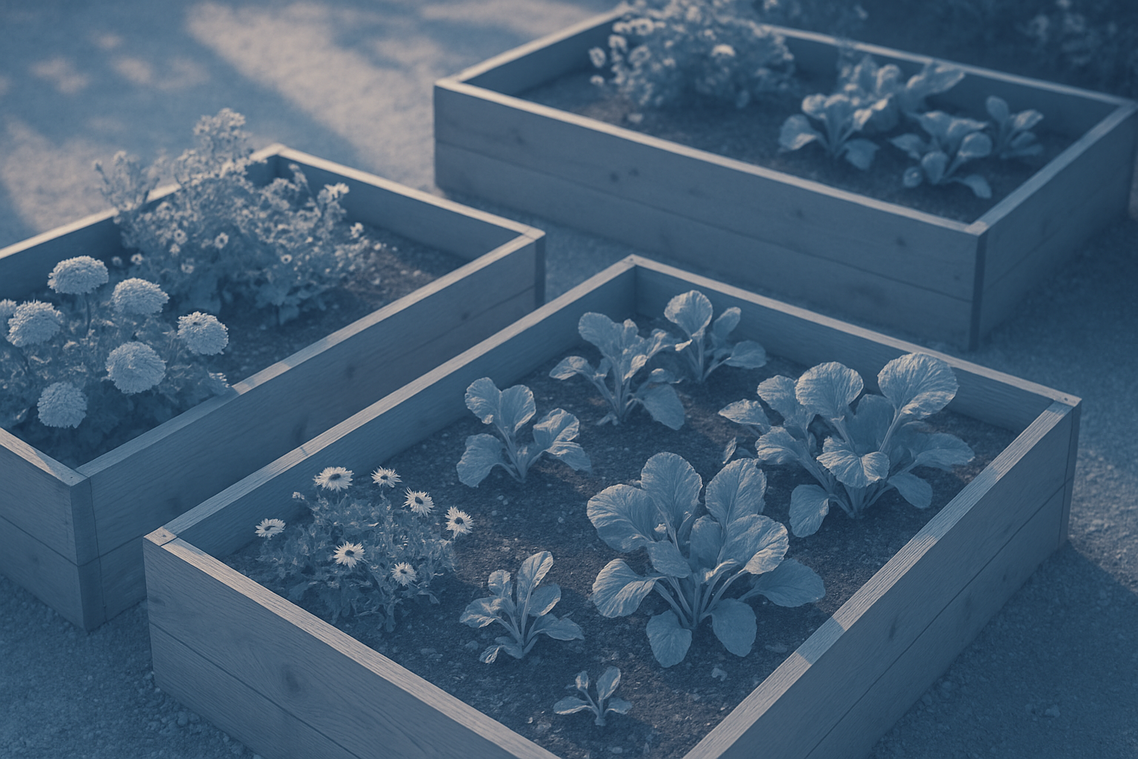
You know that feeling when you walk past a house and something just looks right?
The garden beds seem to hug the foundation. The plants frame the front door perfectly. Everything feels like it belongs.
That’s not luck.
Some people say you should just plant wherever there’s space and let nature do its thing. They argue that overthinking placement kills creativity and makes your yard look too formal. While some may advocate for a carefree approach to landscaping, understanding “How to Design a Garden Kdagardenation” can transform your outdoor space into a harmonious blend of creativity and natural beauty. While some may advocate for a carefree approach to landscaping, understanding “How to Design a Garden Kdagardenation” can transform your outdoor space into a harmonious blend of creativity and nature’s beauty.
But here’s what I’ve learned from designing garden beds kdagardenation style.
Random placement makes your yard feel scattered. Like someone just dropped plants wherever they had five minutes to dig.
The truth is simpler than you think.
Your beds need to work WITH your house. Not against it.
Start at the corners. That’s where your home meets the ground at hard 90-degree angles (and trust me, nothing in nature grows at perfect right angles). A bed that wraps around a corner softens that harsh line. You want it wide enough that when you stand at your front door, you can see the curve without squinting.
Here’s my rule for sizing. Your main foundation bed should be at least one-third the height of your first floor wall. So if that wall is 9 feet tall, your bed needs to be 3 feet deep minimum. Anything less looks like you gave up halfway through.
Walk your property line and notice where your eye naturally travels. That’s where you place beds to guide people. Along the driveway. Next to the walkway. Between the patio and lawn.
Curves beat straight lines every time. A gentle S-shape pulls you forward and makes even a small yard feel like there’s more to explore. Layer your beds at different depths too. The kdagardenation garden guide by kdarchitects covers this in detail.
When you get it right, you’ll FEEL the difference before you see it.
Step 4: Plant Selection – The ‘Thriller, Filler, Spiller’ Method
This is where most people freeze up.
You’re standing in the garden center staring at hundreds of plants and you have no idea what goes together. I’ve been there. It’s overwhelming.
But I’m going to give you a formula that takes the guesswork out of designing garden beds kdagardenation style.
It’s called Thriller, Filler, Spiller. And once you get it, you’ll never look at a garden bed the same way.
Thrillers are your tall plants. Think ornamental grasses, canna lilies, or even a small Japanese maple. These give you height and catch your eye first. They’re the stars of the show.
Fillers are your workhorses. Plants like hostas, coral bells, or geraniums that fill in the middle layer and make everything look full. Without these, your bed looks sparse (and honestly, a little sad).
Sprillers cascade over the edges. Creeping Jenny, sweet potato vine, or trailing petunias soften those hard lines and make the whole thing feel finished.
Here’s a real example. I planted a purple fountain grass as my thriller. Surrounded it with pink begonias as fillers. Then added trailing verbena to spill over the front edge. The whole bed came together in one afternoon.
But don’t stop there.
Think about color. You can go with complementary colors like purple and yellow for drama. Or stick with analogous colors like blues and purples for something calmer. Neither is wrong. It depends on what you want to feel when you look at it.
Texture matters too. Mix broad leaves with fine grasses. Pair smooth foliage with something spiky. This keeps things interesting even when nothing’s blooming.
And here’s what nobody tells you about How to Design a Garden Kdagardenation approach.
You need to plan for winter.
Mix in some evergreens. Add perennials that have structure even when they’re dormant. Throw in a few annuals for summer color. This way your bed doesn’t turn into a brown wasteland come November. To ensure your garden remains vibrant throughout the year, take inspiration from the insightful tips in the Kdagardenation Garden Guide by Kdarchitects, which emphasizes the importance of incorporating evergreens and structural perennials alongside seasonal annuals. To ensure your garden remains vibrant throughout the year, take inspiration from the insightful tips in the Kdagardenation Garden Guide by Kdarchitects, which expertly blends seasonal color with structural elements for a truly captivating landscape.
Pro tip: Take a photo of your bed in each season. You’ll spot the gaps and know exactly what to add next year.
Your Blueprint for a Dream Garden
You came here wondering how to turn your blank yard into something beautiful.
Now you have a complete plan for designing garden beds kdagardenation with confidence.
That empty space isn’t intimidating anymore. It’s an opportunity waiting for you to shape it.
The steps I’ve walked you through work because they’re structured. You start with assessment, move through planning, and end with smart plant selection. Each phase builds on the last.
Here’s what you do next: Grab a pencil and paper. Walk your property and really look at what you have. Start sketching out where your beds will go.
Your perfect garden is waiting. You just need to design it.
 Zyphara Kryndall is a botanical scientist and certified horticulturist bringing rigorous scientific research and advanced horticultural expertise to Garden Nation's audience. With a background in plant physiology, environmental science, and practical greenhouse management, Zyphara bridges the gap between academic botany and practical home gardening, helping readers understand the "why" behind successful growing techniques.
Zyphara's contributions to Garden Nation explore advanced propagation methods, plant genetics and breeding principles, soil microbiology, photosynthesis optimization, and cutting-edge horticultural technologies. She translates complex scientific concepts into understandable, actionable advice that empowers gardeners to grow plants more successfully. Whether discussing nutrient uptake, light spectrum requirements, or the microbial relationships in healthy soil, Zyphara's science-informed approach elevates gardening from traditional practice to informed craft.
Her specialties include indoor gardening technology, hydroponic and aquaponic systems, plant tissue culture, disease management through understanding plant biology, and optimizing growing conditions for maximum health and productivity. Zyphara is fascinated by how understanding plant physiology enables gardeners to troubleshoot problems more effectively and create ideal growing environments for different species.
Beyond her contributions to Garden Nation, Zyphara actively collaborates with university research programs and botanical institutions, translating recent horticultural discoveries into accessible content for home gardeners. She regularly attends horticultural conferences, maintains connections with plant breeding programs, and stays at the forefront of innovation in growing technology. Her mission is to democratize botanical knowledge, proving that scientific understanding and practical gardening success are not exclusive to professionals but accessible to anyone willing to learn.
Zyphara Kryndall is a botanical scientist and certified horticulturist bringing rigorous scientific research and advanced horticultural expertise to Garden Nation's audience. With a background in plant physiology, environmental science, and practical greenhouse management, Zyphara bridges the gap between academic botany and practical home gardening, helping readers understand the "why" behind successful growing techniques.
Zyphara's contributions to Garden Nation explore advanced propagation methods, plant genetics and breeding principles, soil microbiology, photosynthesis optimization, and cutting-edge horticultural technologies. She translates complex scientific concepts into understandable, actionable advice that empowers gardeners to grow plants more successfully. Whether discussing nutrient uptake, light spectrum requirements, or the microbial relationships in healthy soil, Zyphara's science-informed approach elevates gardening from traditional practice to informed craft.
Her specialties include indoor gardening technology, hydroponic and aquaponic systems, plant tissue culture, disease management through understanding plant biology, and optimizing growing conditions for maximum health and productivity. Zyphara is fascinated by how understanding plant physiology enables gardeners to troubleshoot problems more effectively and create ideal growing environments for different species.
Beyond her contributions to Garden Nation, Zyphara actively collaborates with university research programs and botanical institutions, translating recent horticultural discoveries into accessible content for home gardeners. She regularly attends horticultural conferences, maintains connections with plant breeding programs, and stays at the forefront of innovation in growing technology. Her mission is to democratize botanical knowledge, proving that scientific understanding and practical gardening success are not exclusive to professionals but accessible to anyone willing to learn.